
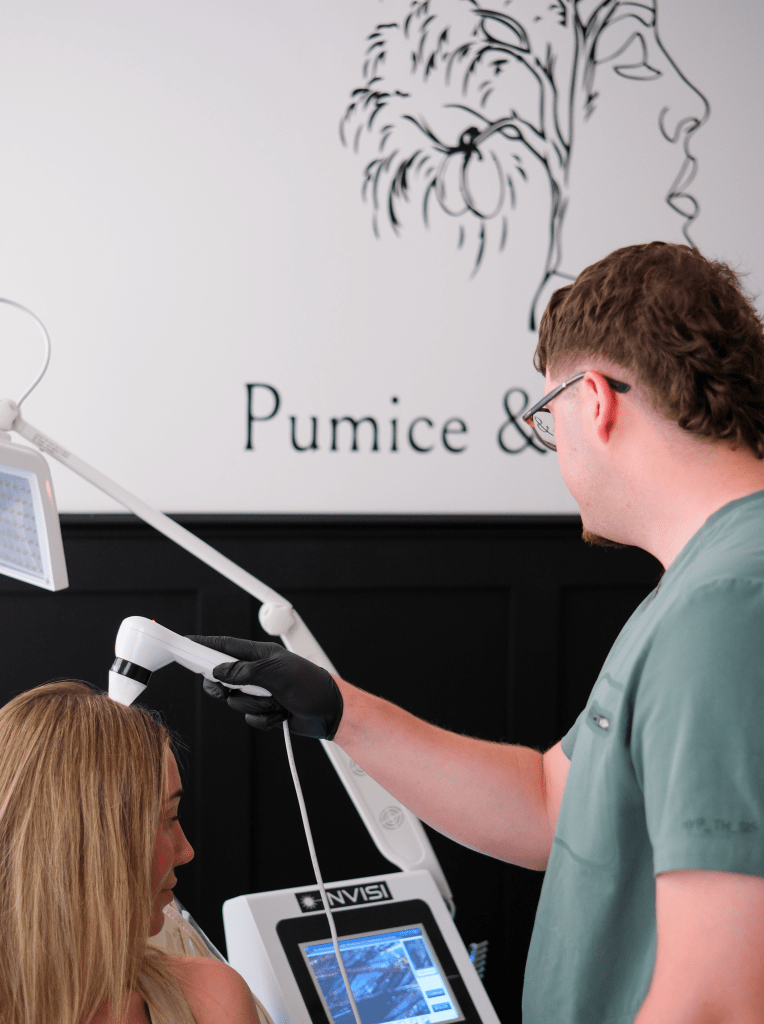
If you’ve started paying closer attention to how much hair ends up in the shower drain, you’re not alone, it’s one of the most common hair concerns we hear about. Is it normal, or a sign that something’s wrong?
The truth is, losing hair every single day is completely natural, and it’s part of how our hair actually sheds and grows. The trickier question is knowing where “normal shedding” ends and where a genuine hair concern begins.
Every strand of hair on your head goes through a natural growth cycle made up of three stages:
At any given time, between 85% and 90% of your hair is in the growth phase, while the remainder is resting or shedding. Because hundreds of thousands of hairs are cycling through these stages, some daily loss is simply the visible sign of this process working as it should.
Most experts agree that losing between 50 and 100 hairs a day is within the normal range. On an average head of roughly 100,000 hairs, that’s a tiny fraction, and it’s usually not noticeable in day-to-day life.
It’s worth remembering that this number is an average, not a strict rule. Some people naturally shed a little more, others a little less, depending on factors like hair thickness, length, and overall hair density. Longer hair can also make shedding more visible, since strands are easier to spot on clothing, pillows, or in the shower.
A number of things can cause your hair shedding to increase temporarily, without it being a long-term problem:
In most of these cases, shedding settles back down once the underlying trigger resolves.
While daily shedding is expected, there are some signs that suggest something beyond the usual cycle may be going on:
If any of these sound familiar, it doesn’t necessarily mean the cause is serious, but it does mean a proper assessment can help identify what’s going on and what might help.
If you’re concerned about how much hair you’re losing, it can help to keep an eye on things over a few weeks rather than judging by a single bad day. A few simple ways to do this:
This kind of tracking can also be genuinely useful information to bring along to a consultation, as it helps build a clearer picture of what’s happening over time.
If your hair shedding feels excessive, is persisting, or is accompanied by visible thinning, the best first step is to get a professional opinion rather than guessing at the cause.
Hair thinning can stem from a wide range of factors, including genetics, hormones, nutrition, stress, and underlying health conditions, and identifying the right cause is key to finding the right approach.
When you book an consultation at Pumice & Willow, we take the time to properly assess your hair and scalp health before recommending any course of action. Depending on what we find, this might include treatments such as laser hair regrowth therapy, or other options tailored to you.
Getting an accurate picture early on gives you the best chance of managing shedding effectively and feeling confident about your hair again.
Some hair loss, generally in the region of 50 to 100 hairs a day, is a completely normal part of the hair growth cycle. Shedding can increase temporarily due to stress, illness, hormonal changes, or seasonal shifts, and usually settles down on its own.
If you’re unsure whether what you’re experiencing is normal, we’re always happy to help you figure it out. Get in touch with the team at Pumice & Willow to book a consultation and get a clear, personalised answer.