
Hair transplant healing isn’t linear and can look slightly different from person to person. Typically your scalp will recover within a few weeks, whilst new hair growth takes quite a few months. Usually people tend to see the final result around a year after.
This guide breaks it down stage by stage so that you can have a rough idea of what to expect.
In the days right after hair transplant surgery your scalp will feel tender and the hair grafts will be at their most vulnerable. Swelling is common at this stage, particularly around the forehead and temples. There will be some small scabs that form around each graft site, this is your body healing.
One of the most important things to remember during this stage is to avoid touching or scratching your scalp. You’ll want to sleep with your head slightly elevated to help reduce swelling, and follow washing instructions carefully, making sure to be gentle.
By the end of the second week, your scabbing will have mostly subsided and your scalp will start to look a little more normal. This is because your grafts have started to anchor.
During the healing phases of a hair transplant, you might see some hair loss. This always catches a lot of people off guard. Around weeks three to four, many of the transplanted hairs shed.
The scalp looks thinner than it did just after surgery, which understandably worries people. But the follicle itself stays intact beneath the surface. The shedding is just the hair shaft releasing before new growth begins. However you know your body best and if you feel like something isn’t right, it’s always advised to contact your surgeon.
This phase can feel slightly tedious as not much is visibly happening. The key is patience, as the scalp has healed on the surface but the new hair growth hasn’t quite emerged yet.
This is the time where supportive aftercare makes the most difference. We provide specialist hair transplant aftercare where we tailor an individual plan to help ensure that you get the most out of your hair transplant.
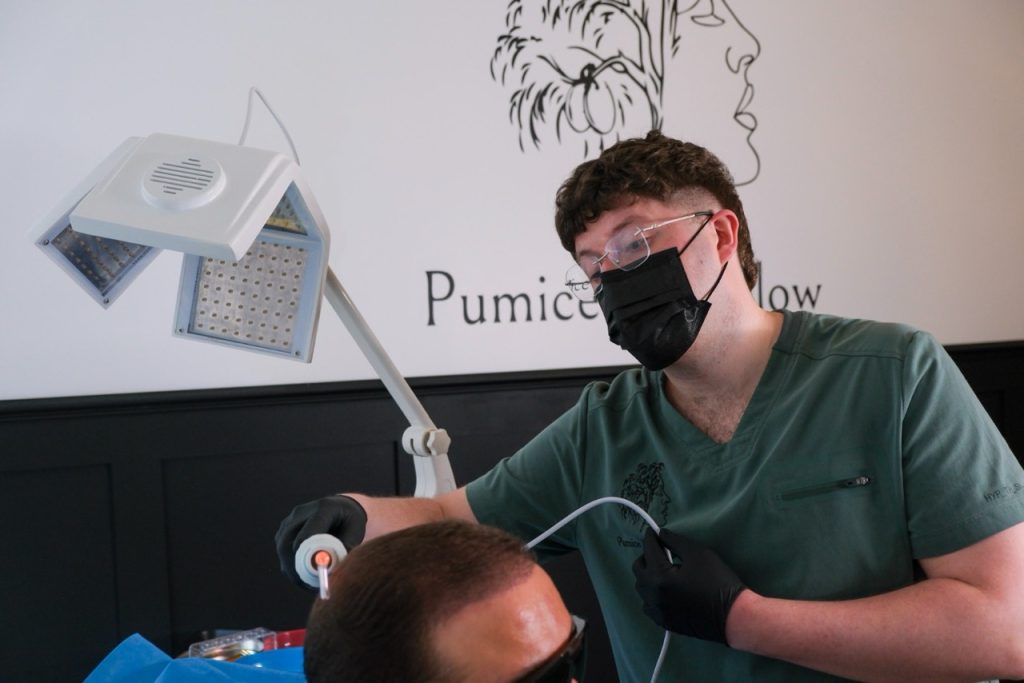
We offer Low Level Laser Therapy (LLLT) during this phase. This helps improve blood flow and supports the healing environment without adding discomfort or pressure to the grafts.
Between months three to six you can start to see new hair beginning to emerge. This is usually fine and light at first but it does gradually thicken and darken over time. By month six you start to see your results taking place, even if it’s not fully there yet.
For those who had LLLT as part of their hair transplant aftercare, this is when we add Plasma Rich Platelets (PRP) into their recovery.. We have to wait until the scalp is ready, and the PRP supports stronger, more even growth through the regrowth phase.
This is typically where you’ll see your full results, around the six to twelve months mark. Some patients also continue to see improvements right up until 18 months post hair transplant. Your hair density increases, the texture of your hair normalises and the transplanted areas blend much more naturally with your existing hair.
Most of our hair transplant aftercare clients remain with us for around six months, with treatments planned across that period to support healing, growth and long term results.
Hair transplant recovery time isn’t the same for everyone, and the transplant technique that was used during surgery plays a big part.
A Follicular Unit Extraction (FUE) hair transplant typically involves a shorter visible recovery time than Follicular Unit Transplantation (FUT). This is largely because of how the donor area heals.
Scalp health going into surgery matters too, as does how carefully aftercare is followed in those first few weeks. Supportive treatments during recovery can also make a real difference.
The transplant is the process which puts the grafts in the correct places, what happens after that during recovery determines how good of a result you’ll achieve.
There is no shortcut through the healing process, but there are things that you can do to help. Make sure that you keep the scalp clean, using the washing method your surgeon recommended reduces the risk of infection and supports graft survival.
Avoiding heavy exercise, heat, and direct sun in the first few weeks protects the grafts while they are settling. Sleeping with your head slightly elevated reduces swelling early on.
Beyond the basics, supportive treatments like LLLT can help improve blood flow to the scalp during the dormant phase, creating better conditions for growth to come through.
If you’ve recently had a hair transplant and want specialistic support during your recovery, Pumice & Willow offers hair transplant aftercare from our clinic in Liverpool.
We begin with a consultation to assess your scalp and your stage of recovery before recommending anything. Book your consultation today to see how we can help you achieve the best results from your hair transplant. The £30 consultation fee is redeemable against your first treatment.